
Sanger Sequencing Cost in India 2026: Price List, TAT and What You Actually Receive
By Dr. Suresh, PhD · · 7 min read
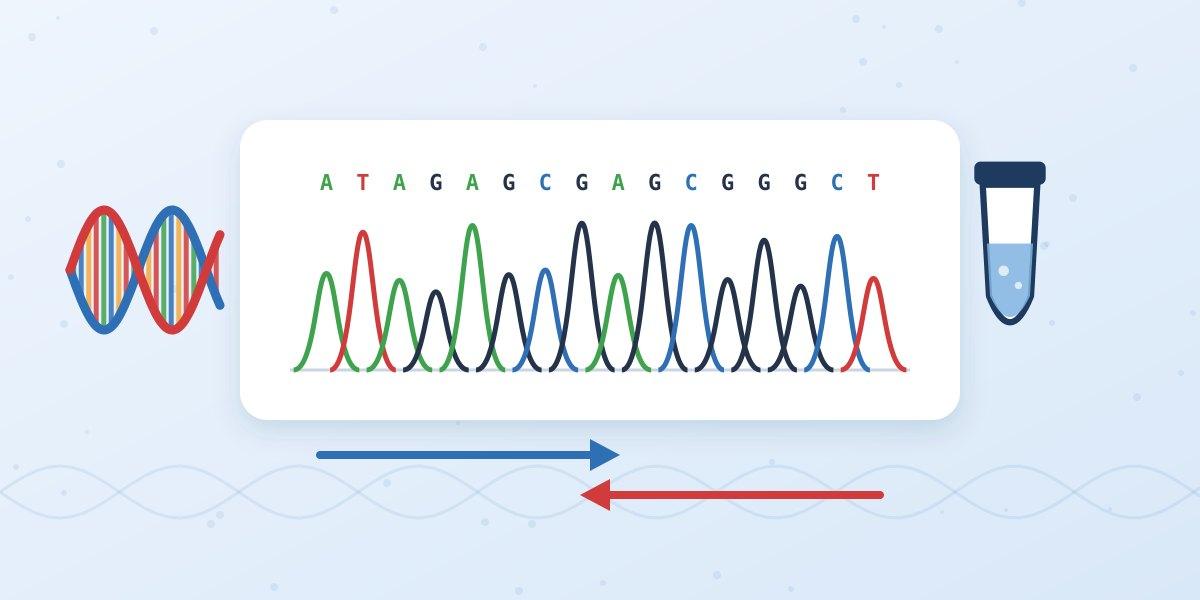
Sanger sequencing is still the fastest way to confirm a clone, identify a cultured isolate or validate an NGS variant. In India the market looks price-transparent on paper but is inconsistent in practice: some quotes leave out extraction, PCR, GST or failed-reaction fees. This guide is written for researchers who need a number they can put in a grant and a checklist they can send to a lab.
What drives the price
Four things change the invoice — not the chemistry:
- Template type — a purified PCR product or plasmid is cheapest. An unpurified PCR product needs a clean-up first. Genomic DNA or a culture needs extraction and PCR before sequencing.
- Direction — one primer (single-pass) is enough to check a cloning junction or a known SNP. Both strands (bidirectional) are expected for species identification, publication and GenBank records.
- Difficulty — GC-rich regions (over ~70 % GC), long homopolymers, hairpins and very large plasmids may need special protocols; tell the lab in advance.
- Analysis — BLAST identification and a phylogenetic tree take extra work beyond "just send the sequence"; ask whether they are included.
Sanger sequencing price list in India 2026 — Yaazh Xenomics
These are our published per-sample prices. GST is extra; academic and bulk pricing is available on request.
| Service | What you send | Price / sample | Turnaround |
|---|---|---|---|
| Purified PCR product — single-pass | Purified PCR product, 10–50 ng/µl, plus your primer (or use ours) | ₹350 | 1–3 days |
| Purified PCR product — bidirectional | Purified PCR product, 10–50 ng/µl, with both primers | ₹700 | 1–3 days |
| Unpurified PCR product — single-pass | Unpurified PCR product, ≥40–60 ng/µl, single clear band — we purify it | ₹500 | 1–3 days |
| Unpurified PCR product — bidirectional | Unpurified PCR product, ≥40–60 ng/µl, single clear band — we purify it | ₹850 | 1–3 days |
| 16S rRNA — bacterial identification | Pure culture, glycerol stock, gDNA or PCR product | ₹3,200 | 3–5 days |
| 18S rRNA — fungi / algae | Pure culture, gDNA or PCR product | ₹3,200 | 3–5 days |
| ITS — fungal / algal identification | Pure culture, gDNA or PCR product | ₹3,200 | 3–5 days |
| COI — insect / animal tissue identification | Specimen in ethanol, tissue or DNA | ₹3,500 | 3–5 days |
| rbcL — plant identification | Fresh or dried plant tissue, or DNA | ₹3,500 | 3–5 days |
Every sample is checked (agarose gel and spectrophotometry) before cycle sequencing with standard terminator chemistry on ABI capillary instruments, and you receive clean, trimmed sequences. For the identification services we also extract DNA and run the PCR for you, and report the closest matches from BLAST.
See all services and order online
Single-pass or bidirectional — which should you pay for?
| Single-pass (one primer) | Bidirectional (both strands) | |
|---|---|---|
| Best for | Clone / insert confirmation, known SNP or mutation checks, routine screening | Species identification, new sequences for papers, theses and GenBank, mutation confirmation |
| What you get | One read, typically reliable for several hundred bases after the primer | Forward and reverse reads merged into one consensus — both strands checked |
| Our price (purified) | ₹350 | ₹700 |
Rule of thumb: if the sequence is going into a thesis, a paper or a GenBank record, pay for bidirectional. The second strand removes most ambiguous base calls and is what reviewers expect.
What you should receive — and what to ask the lab
Before you compare prices, compare what is included. Send this checklist with your enquiry:
- Is GST included in the quoted price?
- Are DNA extraction and PCR included (for culture or tissue samples), or charged separately?
- What happens if a reaction fails — free repeat, or charged again?
- Which files are delivered: trimmed sequence (FASTA), raw chromatograms (.ab1), a quality report, a BLAST identification?
- Is a phylogenetic tree included or an add-on?
- How is the turnaround counted — from dispatch, or from the day the lab receives the sample?
- Can they collect samples from your institute, and at what cost?
At Yaazh Xenomics the turnaround is counted from the day we receive your sample, you can track each sample in your client portal, and we arrange sample pickup across India. Raw .ab1 chromatogram files are included with every Sanger result, and a phylogenetic tree is included with 16S, 18S, ITS, COI and rbcL identification.
How to avoid paying twice: sample-prep tips
- Check your PCR on a gel first. Send only products with a single clear band; multiple bands give mixed traces that cannot be read.
- Get the concentration right — 10–50 ng/µl for purified products, at least 40–60 ng/µl for unpurified ones.
- Send enough primer, clearly labelled, and tell us the primer name if you want us to use a standard one.
- Use pure cultures for identification — streak to a single colony first.
- Label tubes to match your sample sheet exactly; it avoids delays at sample receipt.
For bacterial identification in detail — sample types, reading % identity and getting a GenBank accession — see our guide to 16S rRNA sequencing for bacterial identification.
When Sanger is not the right tool
Sanger reads one DNA region from one template at a time. If your sample is a mixed community (soil, gut, water), choose 16S metagenome sequencing. If you need a whole genome, resistance genes or strain-level typing, choose bacterial whole genome sequencing. For large numbers of samples or targets, NGS is usually cheaper per sample — our NGS sample multiplexing guide explains how.
How to order Sanger sequencing from Yaazh Xenomics
- Choose the service in our online Store (or request a quote for batches and academic pricing).
- Enter your sample names and details in the sample sheet — the columns change with the service (for example primer names for PCR products, or sample type and medium for identification).
- Pay online now, or choose pay later and receive a GST invoice.
- Ship the samples to our lab or book a pickup; print the shipping label from your portal.
- Track each sample and download your results from the client portal.
Order Sanger sequencing online
Frequently asked questions
How much does Sanger sequencing cost in India in 2026?
Typical market prices are about ₹350–₹450 per single-pass read of a purified product, ₹650–₹850 for bidirectional reads, and ₹2,000–₹3,500 for full microbial identification. At Yaazh Xenomics: ₹350 single-pass, ₹700 bidirectional, ₹3,200 for 16S, 18S or ITS identification and ₹3,500 for COI or rbcL, plus GST.
How long does Sanger sequencing take?
Our standard turnaround from sample receipt is 1–3 days for PCR product sequencing and 3–5 days for identification services (16S, 18S, ITS, COI and rbcL), where we extract DNA and run PCR first.
Do I need to purify my PCR product?
No. If you send an unpurified product with a single clear band (at least 40–60 ng/µl), we purify it for you — ₹500 single-pass or ₹850 bidirectional.
Is GST included in the price?
No — the prices above are before GST, which is added on your invoice. Your quote and checkout always show the full amount including GST.
Do you offer academic or bulk discounts?
Yes. Request a quote with the service and number of samples, and we will send you a price to review and accept in your portal.
Get a price for your project
Have a batch of samples or a grant budget to prepare? Request a quote and we will reply with a firm price, or call us on +91 99431 32020. For a single sample, simply order online.
Planning a sequencing project?
Get a tailored quote — our team replies within one business day.
Request a quote